Learn About the Goff 2026 Tournament
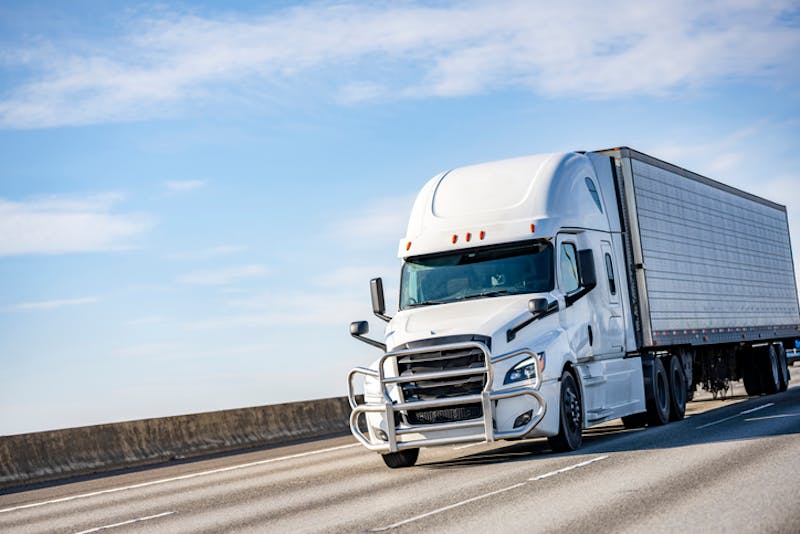
Truck accidents in Hartford, Connecticut, are far more common than most drivers realize. Hartford County sits at the intersection of two of the busiest freight corridors in New England. That concentration of commercial vehicle traffic results in crash rates that consistently rank the county among the highest in the state.
According to data from the Connecticut Crash Data Repository, maintained by the University of Connecticut, Hartford County records some of the highest volumes of commercial vehicle crashes in Connecticut each year. Nationally, large trucks are involved in thousands of fatal collisions annually, and the dense highway network feeding Hartford means local drivers face that risk every day.
Goff Law Group personal injury attorneys represent truck accident victims across Connecticut, Massachusetts, and New York. Led by founding attorney Brooke Goff, who has earned Super Lawyers Rising Stars recognition for 8 consecutive years and recovered millions in compensation for injured clients, our team understands exactly what these statistics mean for the people behind them.
This article breaks down national, state, and local truck accident data, names Hartford's most dangerous corridors, explains the primary causes behind these crashes, and guides you to the official databases where that data lives.
How Common Are Large Truck Accidents in the United States?
Large truck crashes are a national safety crisis. According to the Federal Motor Carrier Safety Administration's Large Truck and Bus Crash Facts, more than 5,700 fatal crashes involving large trucks occurred in the United States in 2021, a significant increase over prior years.
These crashes resulted in roughly 5,800 fatalities. Large trucks represent approximately 5% of all registered vehicles but are involved in a disproportionately high share of fatal crashes.
Key national data points from FMCSA's most recent reporting include:
- Large trucks were involved in approximately 9% of all fatal crashes, despite accounting for a much smaller share of the total vehicle fleet
- An estimated 523,000 large trucks were involved in police-reported crashes in a single year
- Injury crashes involving large trucks numbered more than 155,000 annually
- Rear-end collisions and lane-departure crashes account for the majority of truck crash types
- Interstate highways, while designed for heavy traffic, see elevated fatal truck crash rates because of the speeds involved
Connecticut Truck Accident Statistics
Connecticut's highway system is one of the most heavily trafficked in the northeast, with freight volumes driven by proximity to major East Coast ports and distribution hubs. The Connecticut Department of Transportation reports statewide crash data annually and categorizes crashes by vehicle type, road class, county, and contributing factors.
Similarly, Connecticut's geography concentrates commercial vehicle traffic in predictable ways. The state's two primary interstate corridors, I-84 running east-west and I-91 running north-south, cross directly in Hartford; this means a substantial portion of the state's entire truck crash exposure is concentrated in a single county.
When examining Connecticut-level crash data:
- Hartford County, Fairfield County, and New Haven County consistently account for the largest share of commercial vehicle crashes statewide
- Crashes on limited-access highways (interstates and expressways) produce the most severe injuries because of speed differentials between commercial vehicles and passenger cars
- Wet road conditions and reduced visibility in winter months are documented contributing factors in Connecticut commercial vehicle crashes, consistent with national weather-related crash patterns reported by NHTSA
Truck Accident Frequency in Hartford and Hartford County
Hartford County sees elevated commercial vehicle crash exposure for three structural reasons:
Freight Throughput
First, Hartford is a major freight interchange. Goods moving between New York City, Boston, and points north pass through Hartford. That throughput means a high baseline volume of large trucks on Hartford-area roads at all hours.
Road Geometry
Second, the road geometry in and around downtown Hartford is not friendly to large vehicles. The interchange where I-84 and I-91 meet, known locally as the Mixmaster, features tight curves, short merge distances, and multiple weave sections that challenge commercial drivers who are unfamiliar with the configuration.
Urban Congestion
Third, urban congestion near Hartford compresses the speed differential between stopped or slow passenger traffic and large trucks, which have longer stopping distances. Rear-end and sideswipe crashes in stop-and-go conditions are disproportionately common in urban freight corridors for exactly this reason.
The Most Dangerous Roads for Truck Accidents
Several specific corridors in and around Hartford concentrate commercial-vehicle crash risk due to traffic volume, road design, and freight-routing patterns.
The I-84 corridor in Hartford and the Mixmaster interchange are well-known hazards. The interchange's curves and weaving sections aren't designed for modern truck dimensions and volumes, increasing crash risk for passenger vehicles.
Route 15 (Wilbur Cross/Merritt Parkway) restricts vehicles over 7,500 pounds, banning commercial trucks. However, GPS errors and violations in trucks lead to enforcement issues, causing displaced trucks to use nearby arterials and increasing traffic on those routes.
| Route / Corridor | Key Segment | Primary Risk Factors |
| I-84 (East-West) | Hartford city limits, Exits 44 through 54 | Mixmaster weave complexity, high freight volume, tight interchange geometry |
| I-91 (North-South) | Hartford to Windsor / Hartford to Wethersfield | Heavy through-freight traffic, short on-ramp merge distances |
| I-84 / I-91 Interchange (Mixmaster) | Downtown Hartford | Multiple-weave design, driver unfamiliarity, elevated rollover risk for high-clearance vehicles |
| US Route 5 (Berlin Turnpike) | Newington through West Hartford | Dense commercial strip traffic, frequent driveway conflicts, mixed truck and passenger volume |
| I-291 | Windsor to Manchester | High-speed bypass used by trucks avoiding downtown Hartford; collision speeds are elevated |
| Route 2 (East-West Connector) | East Hartford to Glastonbury | Last-mile delivery traffic, residential-adjacent truck routing, intersection conflict |
| US Route 44 | Hartford North End through Avon | Mixed commercial and residential use, inadequate shoulder widths at several points |
| I-384 / Route 6 Connector | East Hartford / Manchester | Short segment with heavy industrial delivery traffic feeding distribution centers |
What Causes Truck Accidents? Crash Factors and Their Frequency
Understanding why truck crashes happen is essential for both prevention and for establishing liability in a personal injury claim. The FMCSA's Large Truck Crash Causation Study identified the critical reason assigned to each crash across thousands of investigated collisions. Its findings remain the primary federal reference for causation analysis.
Several factors warrant additional explanation in the Connecticut and Hartford context, specifically:
Driver Fatigue and Hours-of-Service Violations
- Federal hours-of-service regulations, enforced by the FMCSA, cap how long commercial drivers may operate without rest
- Violations of these rules are a documented factor in fatigue-related crashes
- The I-84 and I-91 corridors are heavily traveled by long-haul drivers who may be nearing or exceeding federally permitted hours when passing through Hartford
Brake System Failure
- Truck brake failures are the single most common vehicle-factor cause identified in the FMCSA's causation data
- In Connecticut, the grades leading into and out of the Connecticut River valley place additional thermal stress on commercial brake systems, raising the risk of failure on descending approaches to Hartford
Distracted and Impaired Driving
- Per NHTSA data, distraction-related crashes have increased across all vehicle types
- For commercial drivers, cell phone use and in-cab electronic logging device interaction are documented distraction sources
- Connecticut enforces a handheld device ban for all drivers under C.G.S. Section 14-296aa
Wide-Load and Oversized Vehicle Configurations
- Certain Hartford-area routes are designated for oversized vehicle routing under CTDOT permitting
- When oversized loads travel outside permitted corridors or when permitted loads interact unexpectedly with normal traffic, the crash risk is substantially elevated
| Causation Category | Share of All Truck Crashes (FMCSA) | Common Manifestations |
| Driver recognition failure | ~28% | Inattention, distraction, and impaired observation of traffic conditions |
| Driver decision error | ~23% | Speeding, misjudging gaps, following too closely |
| Driver non-performance | ~12% | Asleep at the wheel, medical incapacitation |
| Driver performance error | ~10% | Overcompensation, panic braking, loss of vehicle control |
| Vehicle failure | ~10% | Brake failure, tire blowouts, cargo shift, or load loss |
| Environmental and road factors | ~3% | Slick road surfaces, reduced visibility, and roadway defects |
| Unknown/unclassified | ~14% |
How to Access Official Truck Accident Data for Hartford and Connecticut
Three primary databases cover Connecticut truck crash data, each providing complementary information:
Connecticut Crash Data Repository (CTCDR)
Managed by the University of Connecticut, the CTCDR covers all crash severities with local geographic granularity. Users can filter by:
- Year (data available from 2005 forward)
- County and municipality
- Vehicle type (including commercial motor vehicle)
- Road class (interstate, state highway, local road)
- Crash severity (fatal, injury, property damage only)
- Contributing factors and light conditions
The CTCDR is the appropriate starting point for anyone researching Hartford County truck crash frequency or data for specific corridors.
FMCSA Safety Measurement System (SMS)
The FMCSA SMS database allows the public to look up individual motor carrier safety records, including:
- Crash history
- Inspection violations
- Out-of-service orders
If you were injured by a commercial vehicle and have the carrier's name or USDOT number, this database can reveal whether the carrier had a documented history of safety violations before the crash.
NHTSA Fatality Analysis Reporting System (FARS)
The NHTSA FARS database catalogs every fatal motor vehicle crash in the United States, including those involving large trucks. FARS data is available by state and year, allowing for comparative analysis of truck-involved fatal crashes between Connecticut and neighboring states.
What These Truck Accident Statistics Mean for Your Injury Claim
The higher fatality rates associated with large truck crashes compared to passenger-vehicle crashes reflect the injury severity that drives claim value. These damages are all substantially greater in truck crash cases than in typical car accident cases:
- Medical costs
- Long-term disability expenses
- Lost earning capacity
- Pain and suffering
Additionally, the multi-party liability structure of commercial trucking means that a single crash may involve multiple parties, each potentially bearing some share of liability:
- The truck driver
- The motor carrier
- A vehicle maintenance contractor
- A cargo loader
- A parts manufacturer
Connecticut's modified comparative negligence standard under C.G.S. Section 52-572h permits injured parties to recover damages as long as their share of fault is less than 51%.
Commercial carriers are required to maintain significantly higher insurance minimums than private passenger vehicle owners:
- For general freight carriers, the federal minimum is $750,000 in liability coverage
- For hazardous materials carriers, that minimum rises to $1,000,000 to $5,000,000 depending on the cargo
When an injury was caused by a carrier with a history of unresolved safety violations, that prior record supports an argument that the crash was not an isolated event but the predictable result of ongoing negligence.
Were You Injured In A Truck Accident? Contact Goff Law Group For A Free Case Evaluation.
Truck crashes on Hartford's roads produce some of the most serious injuries seen in personal injury law. Knowing where the crashes happen and why they happen is the first step in understanding your rights when one happens to you.
Goff Law Group has earned a 99% success rate across thousands of Connecticut personal injury cases and more than 491 five-star reviews from clients who have been through exactly what you are facing.
With eight offices across Connecticut, Massachusetts, and New York, including locations in Hartford, West Hartford, New Haven, Stamford, Bridgeport, and Danbury, our team is ready to fight for the full compensation you deserve.
There’s no fee unless we win. Contact us today to book your case evaluation.
Disclaimer: The information on this page is provided for general educational purposes only and does not constitute legal advice. Every case is different. Past results do not guarantee future outcomes.
Back to Blog